


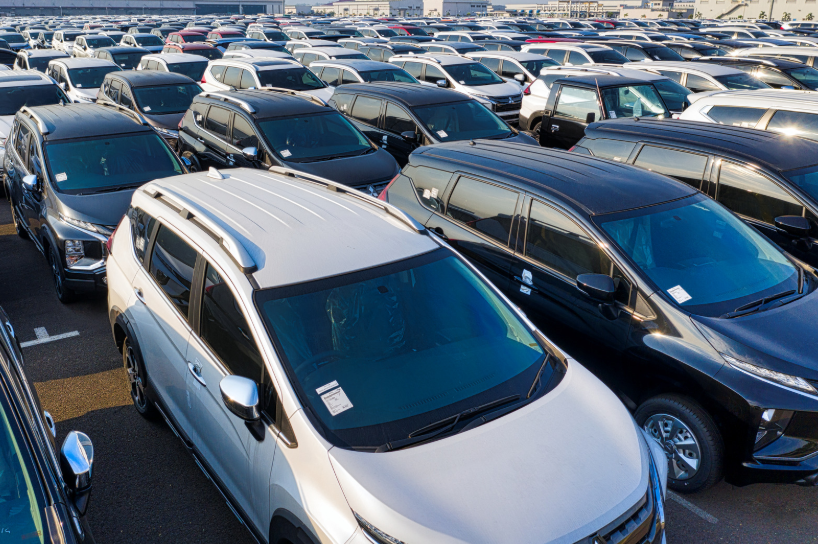
Buying a used car in Garland is one of the better financial decisions you can make, provided you approach it the right way. The DFW used car market is active, prices have normalized from their pandemic-era highs, and a solid selection of late-model vehicles exists at price points that work for a wide range of buyers. What separates a good purchase from an expensive mistake is almost never luck. It is preparation.
This guide walks through the full process: what to research before you ever visit a lot, what to look for during a physical inspection, how to read a test drive, what paperwork to review, and how to evaluate a dealership. Follow these steps in order and you arrive at a decision with real information rather than a guess.
Start with Research Before You Visit a Single Lot
The most common mistake buyers make is beginning their search on a lot without knowing what they are looking for or what it should cost. Sellers of all kinds are better equipped to serve their own interests when you are figuring things out in real time. Doing the research beforehand shifts that balance.
Set a Realistic Budget Before You Start Looking
Your budget is not just the sticker price. It includes the total monthly cost of owning the vehicle: payment, insurance, registration, fuel, and a reasonable maintenance allowance. A common guideline is to keep total vehicle-related expenses at or below 15 to 20 percent of your monthly take-home pay. Buying a vehicle that looks affordable based on the purchase price alone but strains your budget once insurance and other costs are added is a common source of buyer regret.
If you plan to finance, understanding your financing situation before you shop gives you a concrete budget to work within. Know whether you will be applying through a bank, credit union, or in-house lender, and have a sense of what payment amount your income supports before you start looking at vehicles.
Research the Makes and Models That Fit Your Needs
Not all used vehicles offer the same value. Some models hold up well past 150,000 miles with routine maintenance. Others develop expensive and recurring problems at much lower mileage. Before you start looking at specific vehicles, research the reliability history of the makes and models on your list. Owner forums, reliability surveys, and model-specific buyer guides are all useful sources. Knowing which vehicles tend to have expensive or recurring problems at certain mileage ranges lets you ask better questions and evaluate conditions more effectively.
Know the Market Value of What You Are Considering
Pull the current market value of any specific vehicle you are seriously considering using Kelley Blue Book, Edmunds, or both. Use your actual year, make, model, trim level, mileage, and condition. This gives you a baseline for evaluating whether an asking price is fair and a number to reference during any negotiation. A vehicle priced significantly below comparable listings in the Garland market warrants more scrutiny, not less. If the price looks too good to be accurate, find out why before you proceed.
Pull the Vehicle History Before You Inspect Anything
The VIN is the identifier that unlocks a vehicle’s recorded history. Before you invest time in a physical inspection or test drive on a specific vehicle, run the VIN through a history reporting service. This step takes a few minutes and costs roughly $30 to $45 for a comprehensive report. It is not a guarantee of a clean vehicle, since not all incidents get reported, but it catches a significant portion of hidden history that a physical inspection alone cannot reveal.
A vehicle history report shows the number of previous owners, reported accident history, whether the vehicle was ever designated salvage or rebuilt, odometer readings at previous registrations (which can expose rollback fraud), flood or fire damage designations, open recalls, and service records where available.
Pay particular attention to title brands. A salvage title means the vehicle was declared a total loss by an insurance company at some point. A rebuilt title means it was salvaged and repaired. Flood titles indicate water damage. Each of these designations affects both the vehicle’s structural integrity and its resale value significantly. Vehicle history reports are a standard part of responsible used car buying and should not be skipped regardless of how good the vehicle looks in person.
Also check for open recalls using the NHTSA recall database at nhtsa.gov. You can search by VIN and see whether any unresolved manufacturer recalls apply to the vehicle. Recalls are repaired at no cost to the owner at manufacturer dealerships, but only if they are addressed. An open recall on a used car you are about to purchase is something to resolve before the transaction, not after.
What to Look for During the Physical Inspection
Plan your inspection for daylight. Artificial lighting and rain both flatten the visual cues that reveal paint inconsistencies, rust, and body damage. Bring a flashlight for the undercarriage and a phone you can use to photograph anything worth documenting. Give yourself at least 30 to 45 minutes for a thorough walk-around before the test drive begins.
Exterior: Paint, Panels, and Frame
Walk the full perimeter of the vehicle slowly, crouching down to view each panel from a low angle. You are looking for wavy surfaces, color inconsistencies between adjacent panels, and texture differences that suggest one area has been repainted. Mismatched paint is one of the clearest signals of prior accident repair, and it is visible at an angle that direct overhead viewing hides.
Check panel gaps. The spacing between the hood, doors, trunk lid, and fenders should be even and consistent on both sides of the vehicle. Uneven gaps, particularly across the front end, often indicate frame work or structural repair after a significant impact.
Get down and look under the rocker panels and along the frame rails with your flashlight. In North Texas, heavy structural rust is less common than in northern states, but flood-damaged vehicles are regularly resold throughout the DFW area, and corrosion can develop quickly in hidden spots after water exposure. Fresh undercoating that looks newer than the surrounding metal can be a sign that someone applied it to mask frame problems.
Under the Hood
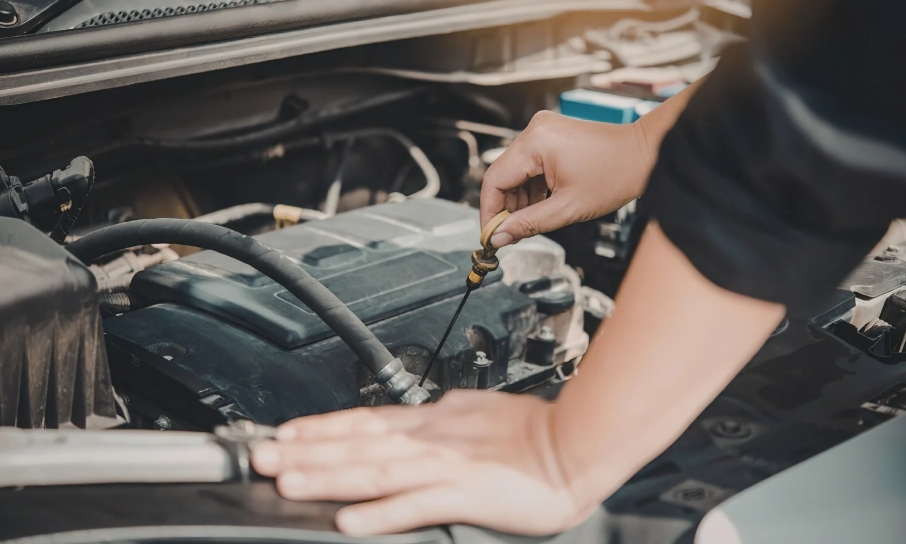
Pull the oil dipstick. Healthy oil is amber to light brown. Black oil indicates the vehicle is overdue for a service, which tells you about maintenance habits. Milky or foamy oil means coolant has mixed with the oil, which typically points to a head gasket failure or cracked block. Either repair runs well above $1,000 and should factor heavily into any decision to proceed.
Check the transmission fluid if the vehicle has a dipstick for it. Pink or red fluid with a slightly sweet smell is healthy. Brown fluid with a burnt odor signals a transmission that has been running hot or without proper service. Look at the coolant reservoir as well. It should be green, orange, or pink depending on type. Brown or rust-colored coolant means a neglected cooling system with internal corrosion accumulating.
Inspect the serpentine belt for cracking, fraying, or a glazed surface. Look along the engine block, valve cover, and oil pan seams for grime with an oily sheen that indicates a slow, ongoing leak. Check the underside of the vehicle for active fluid spots on the pavement where it has been parked.
Interior Condition
Open the doors and smell the interior before you do anything else. A musty or mildew odor is one of the most reliable indicators of water intrusion or flood damage. Lift the floor mats and press on the carpet in the footwells. Any dampness or water staining underneath should stop the evaluation immediately.
Check the seats for wear relative to the mileage. Heavy wear on a vehicle with relatively low odometer reading is a potential indicator of mileage discrepancy. Test every switch, button, and control: windows, locks, mirrors, air conditioning, heat, infotainment, and all dashboard controls. Note any warning lights that illuminate and stay on after startup.
Tires and Brakes
Inspect all four tires for tread depth and wear pattern. Even tread wear across the width of each tire is normal. Wear concentrated on the inside or outside edges points to alignment problems. Wear that is cupped or scalloped often indicates worn shocks or struts. Uneven wear between the front and rear axles can reflect deferred rotation. Any of these patterns tells you the vehicle has a maintenance deficit or a suspension issue that has not been addressed.
Look at the brake rotors through the wheel spokes if visible. Light surface rust on rotors is normal for a vehicle that has been sitting. Deep grooves or a heavily ridged surface indicates rotors that are worn past their service limit and need replacement. Brake pads on most vehicles can be visually assessed through the wheel spokes as well.
How to Read the Test Drive
A short loop around the block is not a test drive. A useful test drive runs at least 20 to 30 minutes and covers city driving, highway speeds, and at least one firm stop from around 45 mph. Here is what to pay attention to throughout.
Cold Start
Start the vehicle cold if possible. Ask that it not be warmed up before you arrive. A cold engine that hesitates, knocks, or produces blue or white exhaust smoke at startup often has problems that go away once it reaches operating temperature. Sellers who pre-warm the engine before your arrival may be doing so to mask cold-start issues.
Engine and Transmission
During acceleration, listen for knocking, ticking, or hesitation. The engine should pull smoothly and consistently through the rev range. The automatic transmission should shift cleanly without hard engagement, shuddering between gears, or the slipping sensation where the engine revs but the car does not accelerate proportionally.
Brakes and Steering
Perform a firm stop from highway speed in a safe, open area. The vehicle should stop straight without pulling to one side. Pulsing or vibrating through the brake pedal indicates warped rotors. Grinding means the pads are metal-on-metal. A soft pedal that needs pumping suggests air in the brake lines or a failing master cylinder.
At highway speed, release the wheel briefly and observe whether the vehicle tracks straight or pulls. Significant pulling to one side can indicate alignment issues, a bent tie rod, or a suspension component that needs attention. The severity determines whether it is a minor adjustment or a more significant problem.
Dashboard Warning Lights
All warning lights should illuminate briefly at startup and then go off once the engine is running. A check engine light, ABS light, or airbag light that remains on after startup indicates an active fault code stored in the vehicle’s computer. Do not accept a seller’s assurance that it is a minor sensor issue without having the code read by an OBD-II scanner or a mechanic. The code is specific information that changes the risk profile of the purchase.
Get a Pre-Purchase Inspection on Any Vehicle You Are Seriously Considering
Even if you have worked through every step above and found nothing concerning, a professional pre-purchase inspection is worth considering on any vehicle in the range of several thousand dollars or more. A trained mechanic with a lift sees things that are not possible to detect from ground level: frame weld quality, undercarriage corrosion, fluid leaks at specific components, worn ball joints, and brake hardware condition throughout.
DallasAutos4Less offers pre-purchase inspections as part of a commitment to transparent transactions. For private seller purchases, an independent shop inspection typically runs $100 to $150 and can identify problems that would cost significantly more to repair after the sale. If a seller refuses to allow an inspection, that refusal is itself meaningful information.
What to Review Before You Sign Anything

The excitement of finding the right vehicle can make it tempting to move quickly through the paperwork. This is the stage where patience matters most. Every document in the transaction should be something you understand before you sign it.
The Buyers Guide
Federal law requires dealerships to post a Buyers Guide on every used vehicle offered for sale. It discloses whether the vehicle is being sold as-is or with a warranty, and the terms of any warranty coverage. If a sale is designated as-is, the dealer is making no guarantees about the vehicle’s condition and you absorb all repair costs after the sale. If warranty coverage is included, the guide specifies what is covered and for how long. Review this document before any other paperwork.
Title and VIN Verification
Verify that the VIN on the vehicle’s dashboard, the door jamb sticker, and the title all match each other and match the history report you pulled. A mismatch between any of these sources is a serious red flag. Check the title for any lien releases that should be present if the vehicle was previously financed and that loan has been paid off.
The Financing Agreement
If you are financing, review the full agreement before signing. Confirm the vehicle purchase price, down payment amount, total amount financed, annual percentage rate, payment amount, payment frequency, number of payments, total paid at end of term, and any fees included in the financing. Know the late payment policy and grace period. Understand what constitutes a default and what the consequences are. These are the terms you will live with for the duration of the loan.
DallasAutos4Less offers in-house financing for buyers across all credit situations, with approval based on employment stability and payment ability rather than credit score. Buyers who have been declined by traditional lenders can explore bad credit auto loans structured around their actual financial situation.
The Warranty
Understand exactly what the vehicle’s warranty covers before you complete the purchase. Every vehicle sold at DallasAutos4Less comes with a dealer warranty covering engine, differential, and A/C components for the life of the loan, plus a complimentary oil change and full detail. Know the scope of your coverage before you drive away.
What Makes Buying a Used Car in Garland, TX Specific
A few factors about the local market are worth keeping in mind as you shop.
North Texas weather creates specific inspection priorities. Hail events occur regularly across the DFW area, and comprehensive insurance coverage is often the only protection against vehicle damage from storms. When inspecting a vehicle’s exterior, look carefully at the roof, hood, and trunk lid for dimpling consistent with hail impact. Minor hail damage is often cosmetically repaired and may not be reflected in the vehicle history if it was not an insurance claim.
Flooding is another North Texas reality. Flood-damaged vehicles are regularly transported out of affected areas and resold throughout the region, sometimes with titles that do not reflect the damage accurately. The combination of a vehicle history report and a physical inspection for the signs described earlier, musty odors, water staining under mats, corrosion on fasteners and wiring connectors, is the best defense against purchasing a flood vehicle unknowingly.
The DFW used car market is competitive at popular price points, particularly for practical vehicles under $15,000. When demand is high for a vehicle type, sellers have less incentive to negotiate. Understanding the market value of what you are looking at before you visit any lot gives you the grounding to evaluate asking prices accurately rather than accepting whatever is presented.
Frequently Asked Questions
How many miles is too many on a used car?
Mileage is less meaningful than maintenance history. A well-maintained vehicle at 120,000 miles can have significantly more reliable life remaining than a neglected one at 70,000 miles. The average driver puts on roughly 12,000 to 15,000 miles per year, so age and mileage together give you context. Vehicles from brands with strong reliability histories and documented service records can often run past 200,000 miles without major mechanical events.
What is the most important thing to check on a used car?
Engine and transmission conditions carry the most financial weight because repairs to either one are the most expensive and often signal broader mechanical decline. Checking fluid condition, doing a cold start, and evaluating transmission shifting during the test drive covers the most critical ground. A vehicle history report and a pre-purchase inspection round out the due diligence.
Should I buy from a dealer or a private seller?
Dealerships generally offer more buyer protections: warranty coverage, documented inspection history, financing options, and accountability through licensing requirements. Private sellers often price vehicles lower but typically sell as-is with no recourse if problems emerge after the sale. For buyers who are less experienced with vehicle inspections or who need financing, a dealer transaction offers meaningful advantages.
How do I know if a used car price is fair?
Check the vehicle’s value on Kelley Blue Book and Edmunds using the actual year, make, model, trim level, mileage, and condition. Compare it to similar listings in the Garland and DFW market. If the asking price is significantly above comparable listings without a clear reason, that is a negotiating point. If it is significantly below, that warrants additional scrutiny rather than excitement.
What documents should I receive when buying a used car in Texas?
You should receive the signed title (or a title transfer document if the title is being processed), the buyer’s guide, the financing agreement if applicable, any warranty documentation, and a receipt for your down payment. The dealer is responsible for initiating the title transfer and registration process. Confirm the timeline and process for receiving your permanent registration and license plates.
Do I need a pre-purchase inspection if I am buying from a dealership?
Reputable dealerships inspect their vehicles before offering them for sale, which reduces but does not eliminate the risk of undisclosed problems. A pre-purchase inspection by an independent mechanic provides an unbiased second opinion, particularly on higher-priced vehicles. Most dealerships will accommodate the request. If a dealership resists an independent inspection, that is information worth taking seriously.
What should I do if the check engine light is on?
Do not proceed with the purchase until you know what fault code is stored. An OBD-II scanner reads the code in minutes, and the code itself tells you whether you are dealing with a loose gas cap or a catalytic converter failure. The seller’s verbal assurance that it is minor is not a substitute for the actual diagnostic information.
About DallasAutos4Less
With over 30 years in the car business, DallasAutos4Less is a trusted used car dealership serving buyers throughout Garland and the wider DFW area from our location in Garland, TX at 2660 S Garland Ave. Every vehicle on the lot is inspected before sale and backed by a dealer warranty covering engine, differential, and A/C components. In-house financing is available for buyers across all credit situations, with approval based on payment ability rather than credit score. Every purchase includes a complimentary oil change and full detail.
Ready to Find Your Next Vehicle?
Browse the current used car inventory to see what is available, or stop by our Garland dealership at 2660 S Garland Ave. You can also contact our team or call (469) 298-3118 with questions before you come in. At DallasAutos4Less, we say yes when others say no.
