



North Texas does not give much warning. A clear spring afternoon can turn into a severe thunderstorm in under 30 minutes, and when hail comes with it, the damage happens fast. Texas led the nation in major hail events in 2024, and the Dallas County area sees regular strikes from storm cells that move through the DFW corridor during spring and early summer. A single storm that drops golf ball-sized hail can produce $4,000 to $8,000 in vehicle damage per car.
The good news is that most hail damage is preventable, or at least reducible, if you have a plan in place before a storm forms. This guide covers what actually works to protect a vehicle in the Garland and Dallas area, what gives a false sense of security, and what to do in the immediate window before and after a storm hits. It also addresses what hail damage means specifically for used car owners and buyers in this market.
Why the Dallas-Garland Area Faces an Elevated Hail Risk
North Texas sits in what meteorologists call Hail Alley, a corridor that stretches from Texas through the Central Plains where warm, moist air from the Gulf of Mexico collides with cooler, drier air from the Rocky Mountains and the desert Southwest. That collision creates the atmospheric instability that drives the kind of rotating supercell thunderstorms capable of producing large, damaging hail. The DFW metro sits squarely in this corridor.
The timing follows a pattern that Garland drivers can plan around. Hail season in North Texas peaks from March through June, with significant secondary activity in September and October as fall storm systems push through. That said, hail events have occurred in every month of the year in the DFW area, and waiting until peak season to prepare means you are already behind the window when protection actually gets set up.
Dallas County logged multiple significant hail events in 2024, including a May strike with hailstones reaching two inches in diameter. The practical reality for drivers in Garland is that the question is not whether a damaging hailstorm will affect your vehicle during your years in the area. It is how many, and whether you are prepared when they arrive.
The Most Effective Protection: Covered Parking
No product, cover, or mitigation strategy replaces a structure over your vehicle during a hailstorm. Covered parking eliminates hail exposure entirely. Everything else is a partial measure.
Home Parking: Garages and Permanent Carports
If your residence has a garage, using it consistently rather than for storage is the most cost-effective hail protection available. A vehicle parked inside a closed garage during a hailstorm absorbs zero hail damage. The same logic applies to a well-constructed permanent carport with solid roofing material. Carport protection depends on the roofing material. A thin polycarbonate roof will crack under golf ball-sized hail. A metal or solid roofing material provides meaningful protection.
If you own your home and have the space, adding a carport is an investment that pays for itself the first time a significant storm hits. Prefabricated metal carports suitable for a single vehicle range from a few hundred to a few thousand dollars installed, depending on the structure. That cost compares favorably to a single hail damage repair.
Workplace and Away-from-Home Parking
Identifying covered parking at your most frequent destinations outside of home is the next layer of your protection plan. Parking garages near your workplace, frequently visited shopping centers, and other regular stops represent your options when a storm approaches while you are not at home. The key is knowing these options in advance. When a storm warning comes through, you have 10 to 30 minutes at most to act on it. A driver who already knows which parking structure is two blocks from their office is better positioned to protect their vehicle than one who is searching for options as the sky changes.
Note that parking under an overpass during a storm is not a safe or legal option in Texas. Overpasses provide almost no protection from hail that falls at an angle, and stopping on highway shoulders during severe weather creates significant traffic hazards. The occasional news story about this approach does not change its dangers or its limited effectiveness.
When You Cannot Get to Covered Parking
The reality for many Garland drivers is that storms move through at times and places where covered parking is not immediately accessible. A vehicle at a shopping center, parked on a residential street, or at a location without a nearby structure has limited but not zero options.
Purpose-Built Hail Covers
Hail-specific car covers are engineered with thick, multi-layer foam or air-cushion systems designed to absorb impact and disperse the energy of hailstones before it reaches the vehicle body. A standard car cover that is not rated for hail protection provides minimal benefit against anything larger than pea-sized hail. The distinction matters. Look for covers specifically marketed and tested for hail protection rather than general weather covers.
Inflatable hail protection systems, which use a blower to create an air envelope between the cover and the vehicle, are among the more effective portable options. Some deploy in five to ten minutes and are wind-tested for stability. The cost is higher than a padded cover but significantly lower than a single hail damage repair. For drivers who park outdoors regularly and own their vehicle outright without covered parking at home, this type of system is worth evaluating.
The limitation of any portable cover is timing. You need to be near your vehicle, have the cover accessible, and have enough lead time from a weather alert to deploy it before hail begins. Covers kept in your garage at home do not help when the storm catches you at work.
Heavy Blankets and Floor Mats in an Emergency
If you are caught near your vehicle with no cover and no time to reach a structure, thick moving blankets or your vehicle’s floor mats placed over the windshield and hood reduce the severity of damage on those surfaces. This is explicitly a last resort. Moving blankets are widely available and inexpensive enough to keep in a trunk. They will not prevent denting on softer aluminum panels, but they can protect glass and reduce damage to the most exposed flat surfaces.
Attach or weigh down anything you put on the vehicle before the storm arrives. A blanket blown off by wind during a storm does nothing and potentially creates a road hazard for other drivers.
Weather Awareness: The Difference Between Preparation and Reaction

The biggest variable in hail protection is time. Every protection option, from driving to a parking structure to deploying a cover, requires advance notice to be useful. Weather awareness is what creates that advance notice.
Set Up Severe Weather Alerts Before Storm Season
The National Weather Service issues Severe Thunderstorm Warnings when hail of one inch or greater is expected. These warnings are pushed through the Wireless Emergency Alert system to phones in the affected area, but by the time a warning is issued, the storm may be minutes from your location. Signing up for more granular weather alerts from a service that tracks specific storm cells gives you earlier notice and more time to act.
Weather apps that show real-time radar with storm cell tracking and hail probability overlays are more useful than standard forecast apps for this specific purpose. Several free options provide this level of detail. Setting location-based alerts to trigger at the county level rather than waiting for your phone’s default alert means you receive notification earlier in the storm’s approach.
Know Your Spring Routine
March through June in North Texas is when protective habits pay off. Checking the morning forecast before parking for the day, making a habit of covered parking during the week when storms are in the forecast, and keeping a blanket in your trunk during peak season cost nothing and take almost no time. The drivers who lose vehicles to hail damage are frequently those who had a plan in theory but had not made it a consistent practice.
Comprehensive Insurance Coverage: The Financial Foundation
Physical protection measures reduce the probability and severity of damage. Comprehensive insurance coverage handles the financial consequence when damage occurs despite those measures. In a hail-active market like North Texas, carrying comprehensive coverage on any vehicle you could not afford to repair or replace out of pocket is the baseline financial protection that makes every other step meaningful.
Comprehensive covers damage from hail, flooding, theft, vandalism, fire, and other non-collision events. It is not required by Texas law for vehicles you own outright, but for vehicles that are financed, your lender requires it. If you are making payments on your vehicle and do not have comprehensive coverage, you are likely in violation of your financing agreement.
Before storm season, confirm three things about your coverage: that you have active comprehensive coverage, what your deductible is, and whether there are any exclusions or special provisions in your policy for weather-related claims. A $1,000 deductible changes the math on whether to file a claim for moderate damage compared to a $500 deductible. Knowing that number now prevents surprises after a storm.
One practical note: insurers implement binding restrictions when severe weather is actively forecast. You cannot add comprehensive coverage to protect against a storm that is already in the forecast. The coverage decision needs to happen before storm season, not after a hail event is on the way.
What Does Not Work: Common Hail Myths in North Texas
Parking Under an Overpass
This approach is dangerous and ineffective. Hailstones in a North Texas storm frequently fall at an angle rather than straight down, and wind-driven hail can reach the vehicles sheltering under a bridge. Beyond the physical protection issue, stopping on highway shoulders or in lanes during severe weather creates significant collision risk for other drivers. Texas law enforcement regularly issues safety warnings against this practice during severe weather.
Foam Pool Noodles and Cardboard
These improvised solutions circulate on social media periodically. Neither material has the density or resilience to meaningfully absorb the impact of a hailstone traveling at speed. They may reduce damage from the smallest, softest hailstones but provide essentially no protection against anything the DFW area regularly produces.
Wax and Ceramic Coatings
Paint protection coatings have genuine value for protecting against scratches, UV exposure, and chemical contaminants. They do not prevent or reduce hail dents. Hail damage is a structural event where the force of impact deforms metal. A coating on the surface of that metal does not affect the outcome. This is worth knowing because some detailing services imply broader protection benefits than coatings can actually deliver.
Assuming a Carport Is Full Protection
An open-sided carport provides good protection against hail falling at a steep angle but limited protection against hail driven by strong horizontal winds. In a severe storm, hail can reach a vehicle parked under a carport if the sides are open and wind is moving the stones at an angle. A carport is meaningfully better than no cover and appropriate for most hail events in North Texas, but not equivalent to a fully enclosed garage in a major storm.
If Your Vehicle Gets Hit: What to Do Immediately After a Storm
Even with good preparation, hail damage sometimes happens. The actions you take in the hours immediately following a storm affect both the repair outcome and the insurance claim process.
• Wait until the storm has fully passed before going outside to assess your vehicle. Lightning and wind remain dangerous during and immediately after a severe cell.
• Document the damage before you move or touch anything. Photograph the entire vehicle from multiple angles in good light, including the roof, hood, trunk, all four doors, and the windshield. Take close-ups of every dent, chip, and crack. Timestamped photos support your claim and establish that the damage occurred during the storm event.
• Do not initiate repairs before filing your claim. Most insurers require you to have an adjuster assess the damage before repair work begins. Starting repairs before the claim is processed can complicate the settlement.
• Contact your insurance company promptly. Texas gives policyholders up to two years to file a hail damage claim, but filing sooner produces faster payouts and reduces the risk of additional damage from exposure to weather before repairs are complete.
• Cover any broken glass or compromised seals with a tarp or plastic sheeting to prevent rain intrusion while you wait for repairs. Insurers can reduce payouts for damage that worsens due to neglect after the initial event.
• Get at least one independent repair estimate before accepting the insurer’s initial settlement. You have the right to choose your own repair facility. If you find the estimate low, your shop and the insurer can often negotiate directly.
Hail Damage and the Used Car Market in Garland
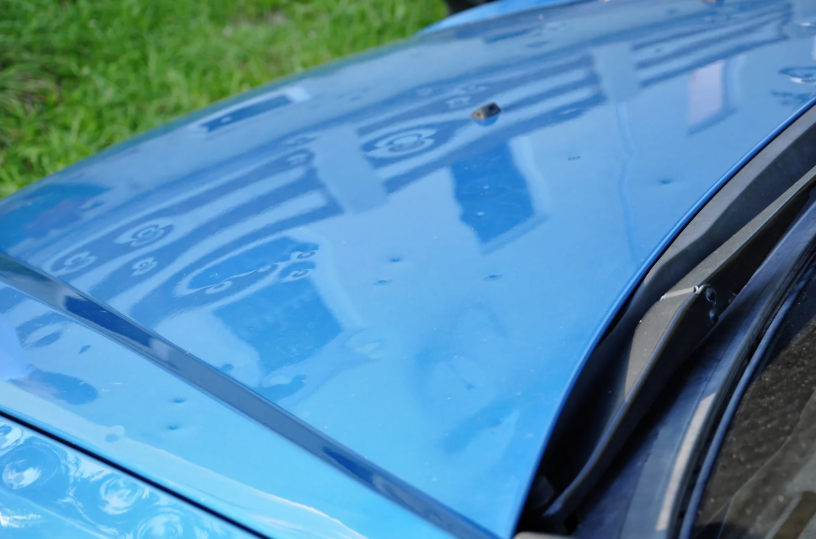
For buyers shopping the Garland and DFW used car market, hail creates a specific purchasing consideration that does not apply in most other markets. After major hail events in North Texas, vehicles that were damaged, totaled, partially repaired, or left with cosmetic damage enter the used market in significant numbers. Not all of them are disclosed accurately.
Hail dents on a vehicle’s roof and hood are sometimes visible to a careful eye during a daytime walk-around if you crouch down and look along the surface from a low angle. The signature pattern of dozens of small round dents across a flat panel is distinctive. Mismatched paint or slightly different texture on body panels compared to adjacent panels can indicate prior bodywork after hail damage.
Pulling a vehicle history report using the VIN on any vehicle you are seriously considering will flag prior insurance claims, total loss declarations, and salvage or rebuilt title designations where those events were reported. This catches the most significant documented hail incidents. It does not catch damage that was repaired without an insurance claim, which is where a physical inspection matters.
A pre-purchase inspection by a body shop or mechanic can identify repaired or partially repaired hail damage that is not visible in a standard walk-around, as well as prior bodywork that may suggest the vehicle had more damage than its history shows. For any purchase in the DFW used car market where hail is a known regional risk, this step is worth including in your evaluation process.
Hail damage that has been repaired using paintless dent repair and is disclosed accurately in the transaction may not significantly affect a vehicle’s mechanical reliability, but it does affect its resale value and can complicate future insurance claims. Understanding the vehicle’s history before you own it is the cleanest way to avoid inheriting a problem you did not anticipate.
Every vehicle on the lot at DallasAutos4Less is inspected before sale. The included dealer warranty covers engine, differential, and A/C components for the life of the loan. Buyers who want more information about specific vehicles before visiting can find automotive resources on the DallasAutos4Less site or reach the team directly.
If hail damage has affected a vehicle you are currently driving and you are considering trading it, a trade-in appraisal before visiting any lot tells you what the vehicle is worth in its current condition and how that value applies toward your next purchase.
Frequently Asked Questions
When is hail season in the Dallas-Garland area?
Peak hail season in North Texas runs from March through June, with secondary activity in the fall months. However, hail events have occurred in every month of the year in Dallas County. Treating the spring months as high-alert season and building protective habits before March gives you the most reliable preparation window.
What is the most effective way to protect my car from hail in Garland?
Covered parking in a garage or under a solid-roofed structure is the only method that eliminates hail risk entirely. When that is not available, a purpose-built hail protection cover deployed with enough lead time is the next most effective option. Comprehensive insurance coverage ensures that when damage does occur, the financial cost is manageable.
Do hail covers actually work?
Purpose-built hail covers with thick foam or inflatable air-cushion systems are tested for hail protection and meaningfully reduce the severity of damage, particularly on smaller hailstones. They do not make a vehicle completely immune to large-stone hail in a direct hit. General weather covers not rated for hail protection provide minimal benefit. The key is using a product specifically engineered for hail impact rather than general weatherproofing.
Will filing a hail damage claim raise my insurance rates?
Hail is considered a weather event outside your control, and most Texas insurers do not surcharge hail claims the same way they surcharge at-fault accident claims. That said, filing multiple weather claims in a short period with the same insurer can affect your rates or renewal status depending on the company. Check with your insurer before filing on damage that barely exceeds your deductible, since preserving your claims history has its own value.
Can hail damage affect a vehicle’s resale or trade-in value?
Yes. Hail damage history that appears on vehicle history reports, unrepaired cosmetic dents, and prior paintless dent repair that is visible on close inspection all reduce a vehicle’s trade-in and private resale value. The extent of the reduction depends on the severity of the damage, whether it was professionally repaired, and the current market for that specific vehicle.
What should I do if I am driving when hail starts?
Get off the road and into covered parking if possible. A parking garage, a gas station canopy, or a covered commercial structure are all better options than continuing to drive. Do not stop under an overpass. If no covered option is available, pull well off the road into a parking lot, turn on your hazard lights, angle the vehicle so the front faces into the storm to protect the windshield with the body of the car, and stay inside until the storm passes.
How do I tell if a used car has prior hail damage?
Crouch down in good daylight and look along the flat surfaces of the roof, hood, and trunk lid from a low angle. Hail damage produces a distinctive pattern of small round dents across the surface. Check for paint or texture inconsistencies between adjacent body panels. Pull a vehicle history report using the VIN to check for prior insurance claims or total loss records. A pre-purchase inspection by a body shop can identify professionally repaired damage that does not show clearly in a visual walk-around.
About DallasAutos4Less
With over 30 years in the car business, DallasAutos4Less is a trusted used car dealership serving buyers throughout Garland and the wider DFW area from our location in Garland, TX at 2660 S Garland Ave. Every vehicle on the lot is inspected before sale and backed by a dealer warranty covering engine, differential, and A/C components. In-house financing is available for buyers across all credit situations, with approval based on payment ability rather than credit score. Every purchase includes a complimentary oil change and full detail.
Ready to Find Your Next Vehicle?
Browse the current used car inventory or stop by our Garland dealership at 2660 S Garland Ave. You can also contact our team or call (469) 298-3118 with questions before you come in. At DallasAutos4Less, we say yes when others say no.
